Description
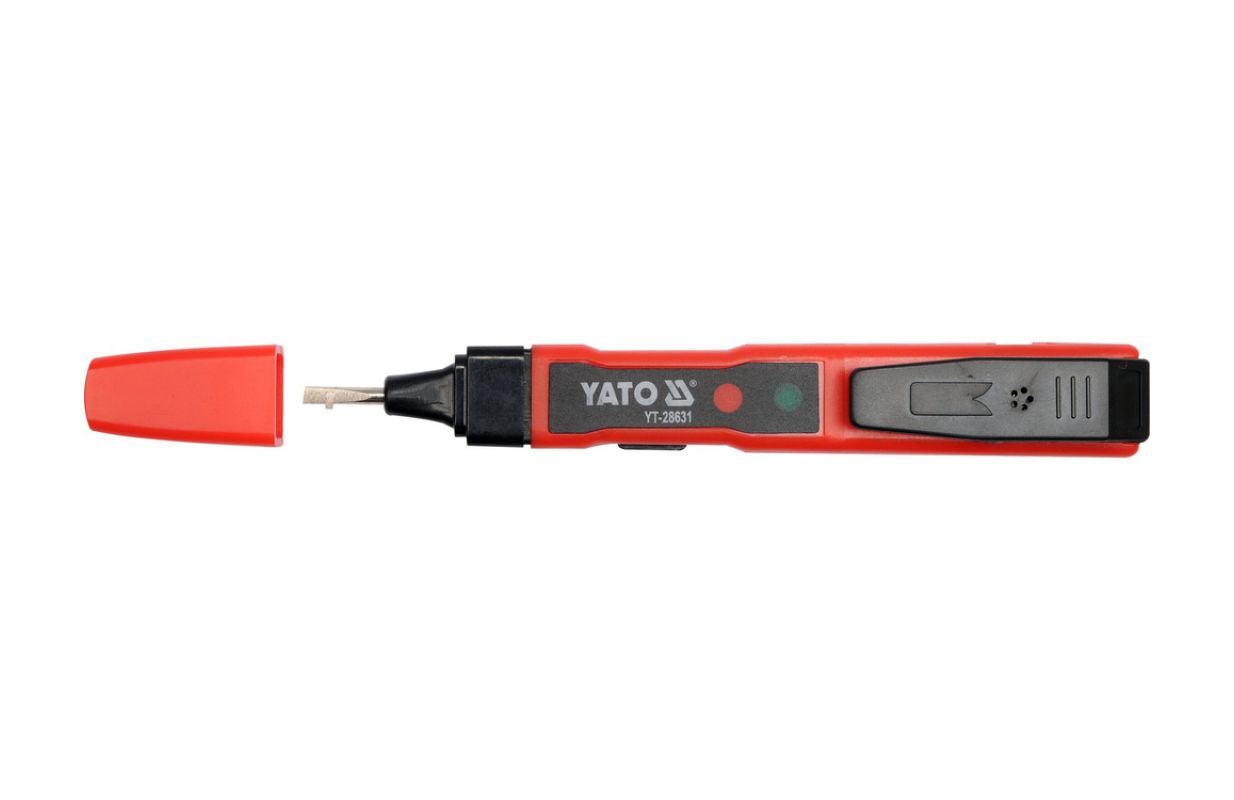
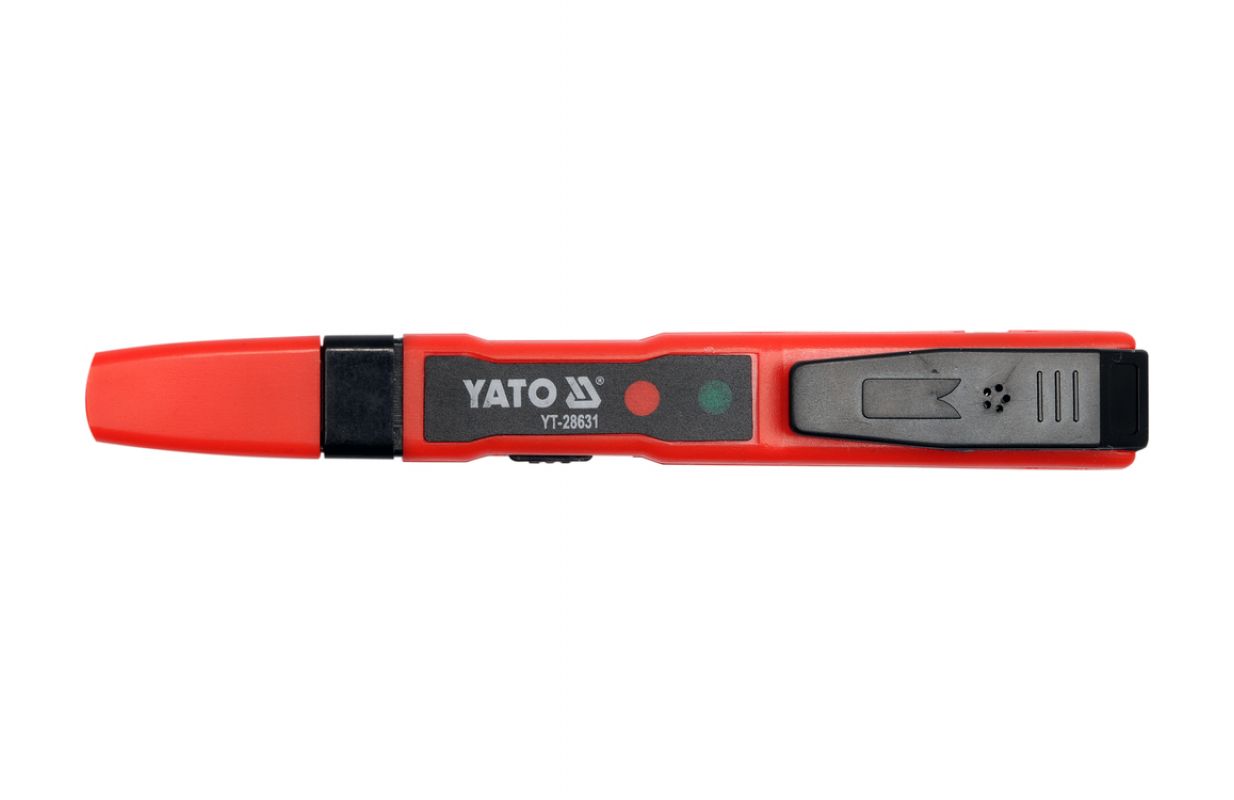
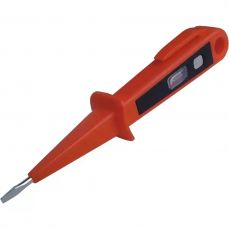
YT-28631 The voltmeter is a universal tester that, among other things, can function as a traditional tester as well as a wireless voltage indicator. It allows you to determine the presence of electrical voltage, measure alternating voltage, for example, behind plaster, as well as conduct a continuity test of wires and check the condition of a battery or rechargeable battery. The presence of voltage is indicated by the illumination of one of the LEDs located in the tester's housing.
Tester functions:
Technical specifications:
Contact method:
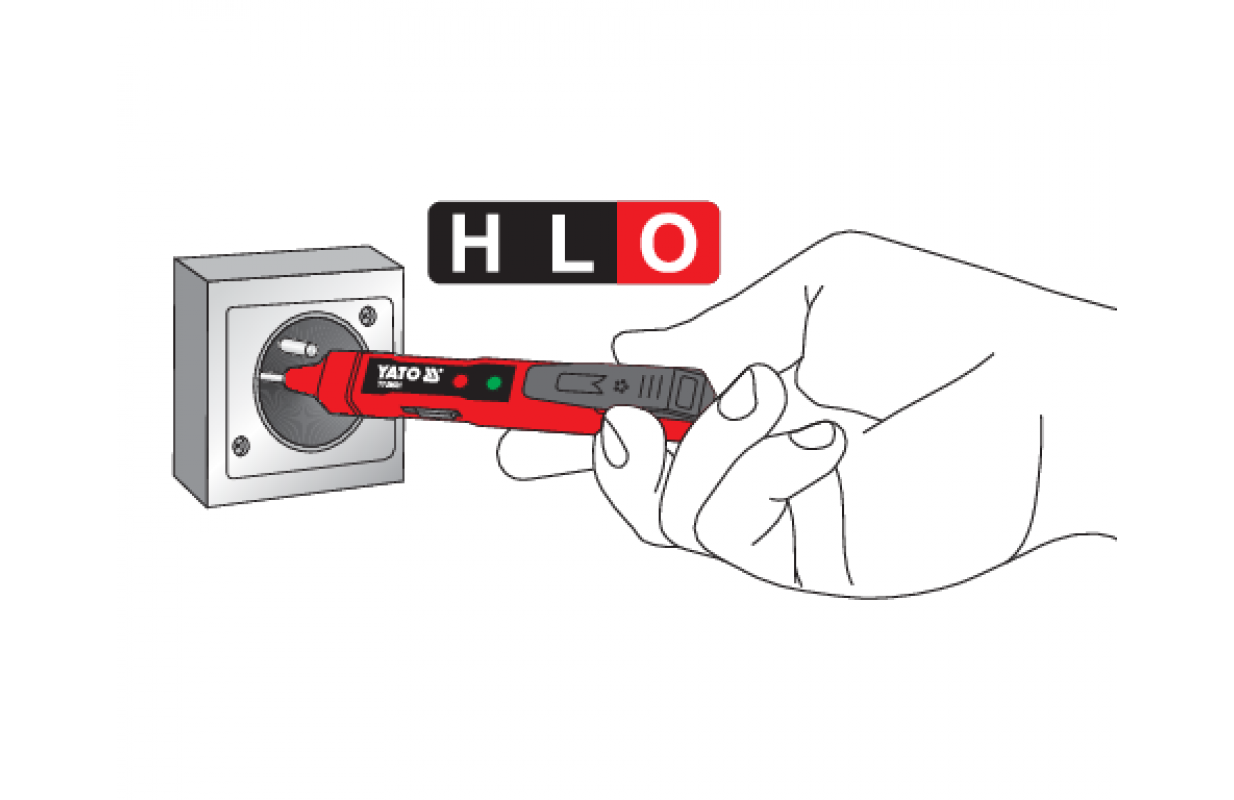
Allows you to determine voltage, check a battery, and conduct a continuity test. To check for the presence of a phase in a socket, set the tester to position [O], then insert the tester tip into the socket hole. The illumination of the red LED indicates the presence of a phase. When using this method, it is not recommended to touch the contact located on the side of the handle. Touching the contact does not create a risk of electric shock but increases the tester's sensitivity and may distort readings.
Battery condition check:
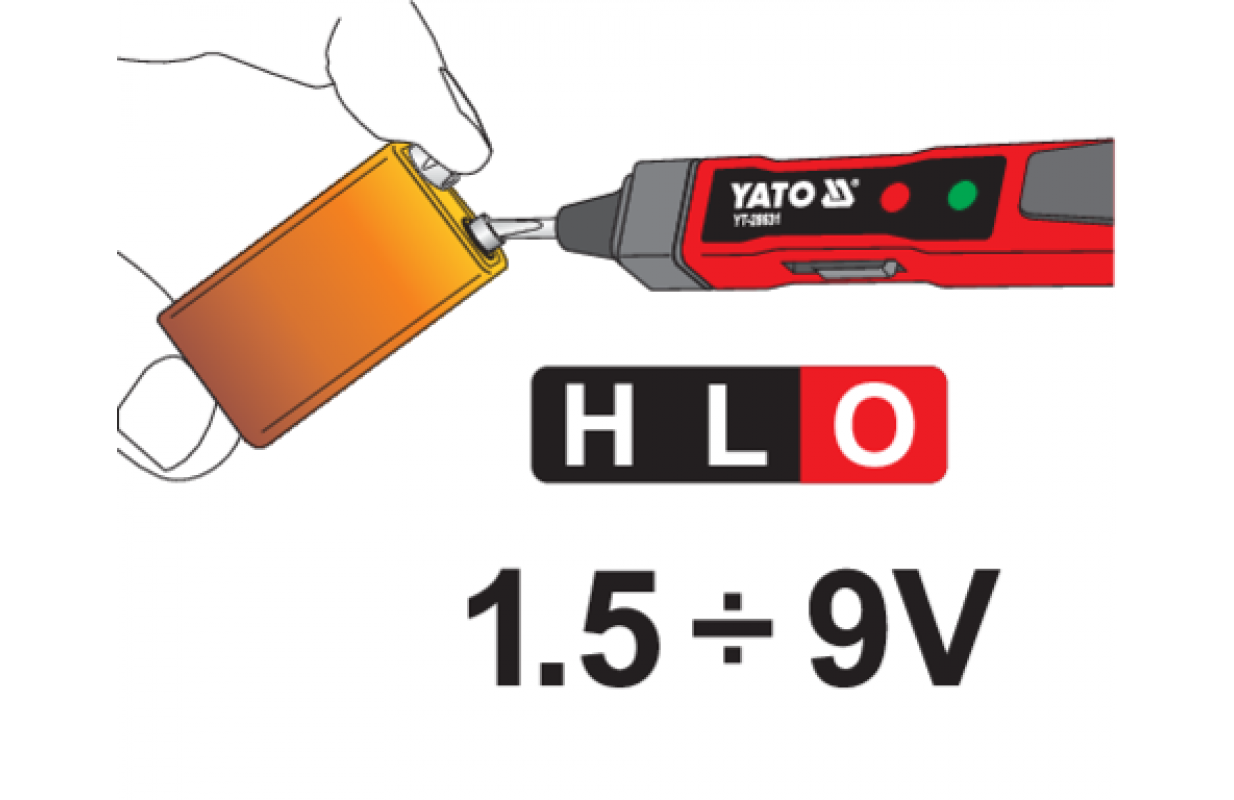
Set the tester to position [O]. Then, touching the side contact of the handle, direct the tester blade to the battery terminal marked "+" and with the other hand touch the battery terminal marked "-". When the LED lights up, it indicates that there is still voltage in the battery. The tester can check the condition of a battery or rechargeable battery intended for powering various electrical devices with a voltage from 1.5 V to 9 V. This method should not be used to check batteries or batteries with higher voltage. Do not check batteries or batteries that are connected to an electrical circuit.
Wire continuity check:
Set the tester to position [O] or [L]. Then, touching the side contact of the handle, touch the tester blade to one stripped end of the wire and with the other hand hold the other stripped end of the wire. If the tester is set to position [O], the red LED will indicate wire continuity. If set to position [L], the green LED will light up and an audible signal will sound. Using this method, it is prohibited to check wire or continuity of wires in electrical circuits that are under voltage.
Inductive method:
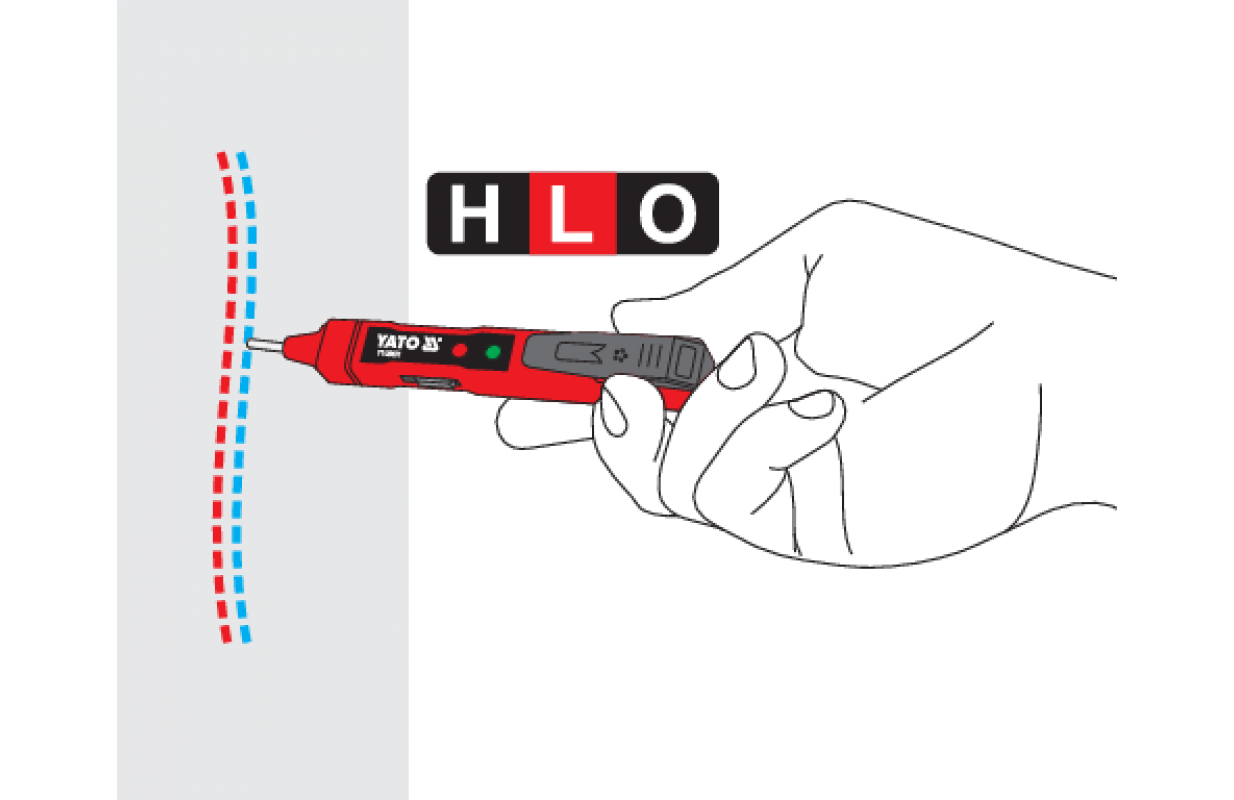
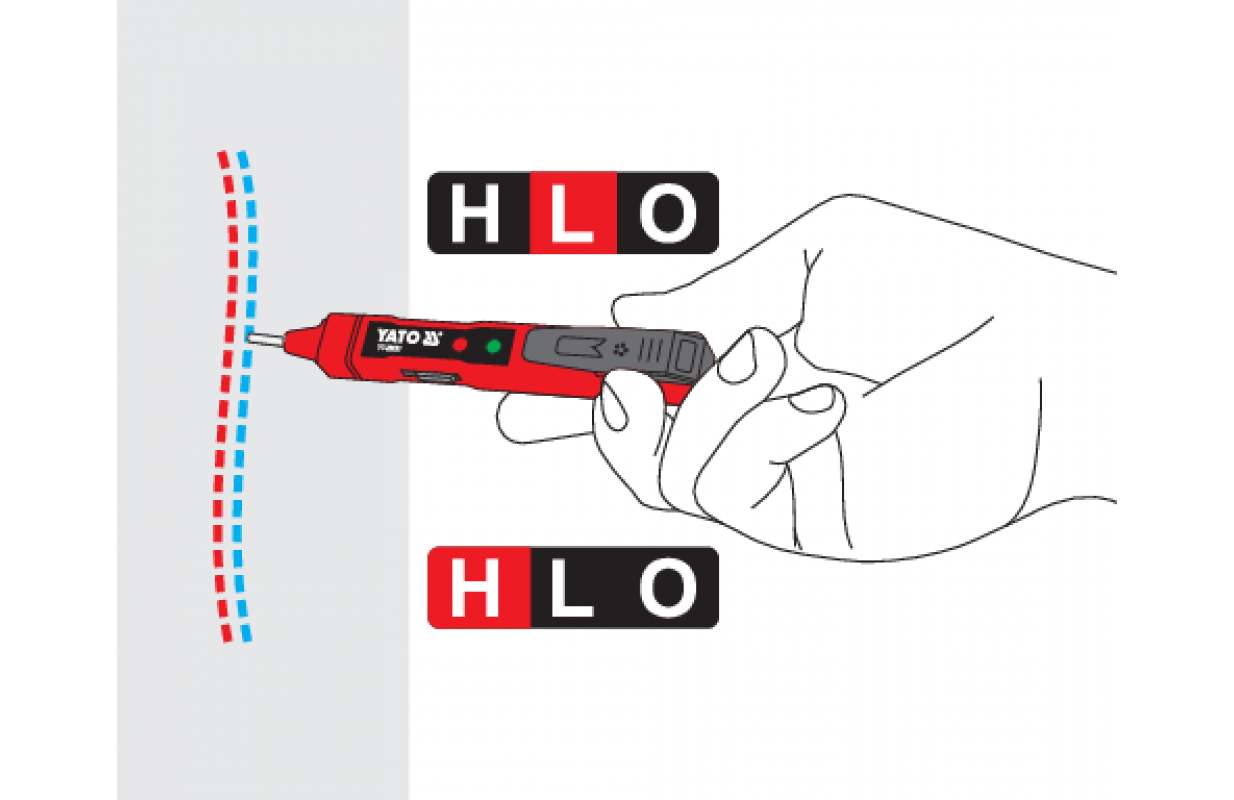
Allows for non-contact determination of alternating voltage even behind plaster. For example, to check if there is voltage in an insulated cable, set the tester to position [L]. Then, holding the blade, bring the metal contact from the top of the handle close to the insulated wire. The green LED will light up, and an audible signal will sound, indicating the presence of voltage in the tested wire. The sensitivity of the method can be increased by switching the button from [L] to [H]. This method also allows for "non-contact" detection of a break in an electrical wire that is under voltage. At the break point, the tester will stop signaling the presence of voltage. It is also possible to change the operation of the tester and search for voltage using the end of the main probe. However, when searching for wires behind plaster, care should be taken not to damage the wall.
| Voltage - contact method | 70-250 V AC |
| Voltage - inductive method | 70-1000 V AC |
| Frequency of measured voltage | 50-500 Hz |
| Probe tip | flat type |
| Length | 140 mm |
| Voltage | 1.5-9 V DC |
| Continuity check | 0-100 MΩ |
| Conductivity test | Yes |
| LEDs | Yes |
| Power source | battery source |
| Battery type | 2x1.5V; LR44 |
| Application | electrical |
| Symbol | YT-28631 |



2.67€

2.60€